
The bottle says "up to 3 months." In reality, you're reapplying it every few weeks. What's going on?
Spray wax durability claims are some of the most inflated in detailing. The numbers manufacturers put on labels are generally measured under ideal conditions — controlled temperature, no washing, no sun exposure, no rain. Your car lives in none of those conditions. So let's talk about what spray wax durability actually looks like.
What Spray Wax Is (and Isn't)
Spray wax is a diluted blend of wax or polymer — usually carnauba-based, synthetic polymer-based, or a hybrid of both — in a spray carrier that makes it easy to apply and wipe off quickly.
It's not the same product as a paste wax or liquid wax that you apply, let haze, and buff off. The dilution that makes spray wax convenient also reduces the protection layer it deposits. A single application of spray wax puts a very thin protection film on the surface — thinner than a paste wax application, which is itself thin.
This isn't a criticism — spray wax is genuinely useful and serves a specific purpose. But understanding what you're actually laying down helps calibrate expectations about how long it lasts.
The Variables That Actually Determine Durability
Sun and UV exposure: UV is the primary enemy of wax. Carnauba wax degrades under UV — the same mechanism that makes it smell different when it gets warm in direct sunlight is the mechanism that breaks it down as a protective layer. A car that sits in full sun all day loses its spray wax protection much faster than one that lives in a garage or shaded parking. Real-world UV degradation can cut stated durability in half or worse.
Wash frequency and method: Every wash removes some protection. Shampoo is designed to strip oils and contaminants from the surface — including the protective layer of wax. A single wash might remove 5–15% of the wax layer depending on the shampoo's formulation. Wash weekly and you're eroding the protection significantly faster than if you wash monthly.
pH of the shampoo: pH-balanced shampoos (neutral, around 7) are much gentler on protection layers than alkaline or acidic products. Using a harsh all-purpose cleaner or strong degreaser will strip spray wax in a single application. Even some "car shampoos" are alkaline enough to significantly shorten wax life.
Rain, salt, and road contamination: Rain is mildly acidic (slightly below 7 pH, and more acidic in polluted areas). Road salt is chemically aggressive. Bird droppings are highly acidic. Every one of these attacks the wax layer. A car that gets rained on daily, or that drives on salted winter roads, will burn through spray wax protection much faster than a car in a dry climate.
Paint condition: Spray wax applied to properly decontaminated, smooth paint lasts longer than the same product applied to rough, contaminated paint. Contamination provides more surface area and more attack points for the wax to degrade from.
What "Lasting" Actually Means
How do you know spray wax is still present? Two indicators:
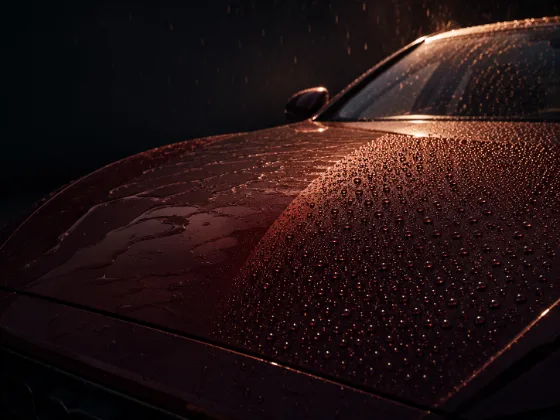
Water beading: Fresh spray wax causes water to bead into tight, round droplets that roll easily off the paint surface. As the wax degrades, beads become larger and flatter, and eventually water sheets rather than beads. When water stops beading tightly and starts sheeting flat, the wax is mostly gone.
The plastic bag test: A wax-protected surface feels smooth and slippery under a bag. As wax degrades, the surface starts to feel more like unprotected paint — slightly more friction, less slip.
The honest answer for most daily drivers in typical conditions: spray wax durability is probably 2–6 weeks, not the 3 months on the label. More toward the 2-week end if the car is driven hard, parked outside, and washed frequently. Closer to 6 weeks in mild conditions with less frequent washing.
Is Short Durability a Problem?
Not necessarily — if you account for it in your routine.
The standard practice for spray wax is to apply it after every wash as part of the drying step. Not as a separate session — as an integrated part of the wash routine. Spray it on the panel as you dry, and the drying towel applies and buffs it simultaneously. This adds maybe 5 minutes to a wash and ensures the protection is consistently refreshed rather than being depleted and not replaced.
Used this way, the durability of any individual application is almost irrelevant. You're not trying to get 3 months out of each application — you're maintaining a continuously refreshed protection layer.
Spray Wax vs. Sealant vs. Ceramic: The Durability Comparison
To put spray wax in context:
- Spray wax: 2–6 weeks per application in real conditions
- Paste/liquid wax: 4–12 weeks per application
- Paint sealant: 6–12 months
- Ceramic coating: 2–5 years
Spray wax sits at the bottom of the durability scale. But it sits at the top of the convenience scale — it's the only protection product that most people will actually reapply consistently, because the barrier to application is nearly zero. And consistent short-duration protection often beats inconsistent long-duration protection in practice.
A car that has fresh spray wax reapplied after every wash is better protected than a car that had a sealant applied two years ago that's now depleted. Frequency matters as much as duration.
How to Maximize Spray Wax Life
Start with a clean surface. Spray wax applied over contamination bonds to the contamination, not the paint. The protection is weaker and fails faster. Decontaminate the paint before applying any protection product.
Use a pH-neutral shampoo. This is the single biggest factor in extending how long spray wax lasts between reapplications. pH-balanced shampoos clean effectively while being gentle on the wax layer. The protection should be depleted by the environment, not by your washing technique.
Apply after every wash, not just occasionally. This isn't a "apply it once and hope" product. Build the application into your wash routine so it's automatic.
Use it in shade or cool conditions. Applying spray wax in direct sunlight or on hot paint can cause it to cure unevenly and streakily. Apply in the shade or wait until the paint is cool to the touch.
Don't use it as the only protection on a freshly corrected or coated surface. For significant paint correction work, apply a more durable sealant or ceramic coating first, then maintain with spray wax on top. Relying on spray wax alone as the sole protection after major prep work means that work is only protected for 2–6 weeks before you need to reapply.
The Bottom Line
Spray wax doesn't last as long as the bottle says. The honest durability in real-world conditions is 2–6 weeks, not 3 months. But that's fine, because spray wax isn't meant to be a set-it-and-forget-it product — it's meant to be applied quickly and regularly as part of your wash routine.
Stop thinking of spray wax as a "protection product you apply occasionally" and start thinking of it as a "wash step that adds protection every time." That reframe makes the durability numbers irrelevant and turns spray wax into exactly what it should be: effortless, consistent paint protection.