Let's be direct about this: if you care about your paint at all, automatic car washes — the kind with spinning brushes — are not a neutral option. They are actively, consistently damaging your clear coat every single time you use them.
This isn't detailing snobbery. It's physics. Here's what's actually happening when you drive through.
What Brushes Do to Clear Coat
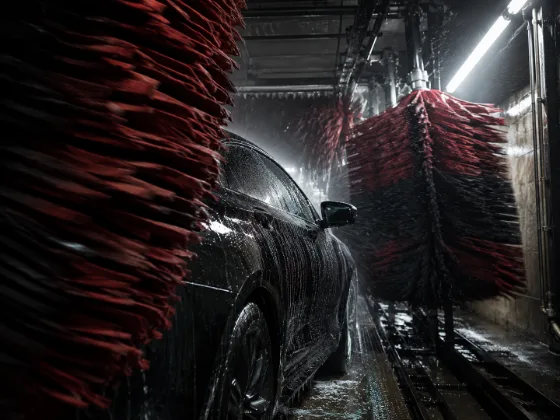
The spinning brushes in a tunnel car wash are designed to contact your paint and physically move contamination off the surface. The problem is that they do this indiscriminately — to your car and to every car before yours.
Each brush picks up contamination from the car it just cleaned. Grit, metal particles from brake dust, road tar, hardened mud, dried bugs. The brushes aren't sanitized between cars. They aren't even rinsed properly between cars. That contamination stays in the bristles and goes directly onto the next car.
The brush hits your paint moving at high speed with those particles embedded in it. The result is fine scratches — lots of them — distributed across every panel the brush touches. Because the brush spins, the scratches are circular. Under a direct light source, the pattern is unmistakable: swirl marks covering every panel.
This happens every single time. There is no "good" tunnel wash with spinning brushes. The mechanism that causes damage is the mechanism by which the wash works.
The Touchless Alternative: Better, But Not Perfect
Touchless car washes address the brush problem by not making physical contact with the paint at all. Instead, they use high-pressure water jets combined with aggressive chemical solutions to blast contamination off the surface.
This is genuinely better for paint than spinning brushes, and if you're in a situation where some form of automated wash is unavoidable, touchless is the right choice. But it comes with its own tradeoffs.
To compensate for the lack of physical agitation, touchless washes use highly alkaline or alkaline/acid combination chemistries. These are effective at breaking down surface contamination, but they're also effective at stripping wax and sealant protection off your paint. One touchless wash can significantly reduce the protection you've built up, leaving the clear coat exposed.
They're also not as thorough as a proper hand wash. Bug splatter, tree sap, and bonded contamination often survive a touchless wash intact.
The "Soft Touch" Myth
Some car washes advertise "soft cloth" or "soft touch" systems that use foam or cloth strips instead of nylon brushes. The marketing implies this is paint-safe.
It isn't. The material is softer, but the same contamination transfer problem applies. Soft cloth that has run over a thousand cars before yours is still loaded with whatever was on those cars. The "soft" part refers to the material composition, not to the likelihood of scratching.
Better than nylon brushes? Marginally. Safe for paint? No.
What About Laser Washes / Express Detailing Bays?
Self-service coin-operated bays with pressure wand and foam brush options are different from automated tunnel washes. Here, you control what touches your car. The pressure wand for rinsing and the foam application are generally fine. The shared foam brush applicators at most self-service bays carry the same contamination transfer problem as tunnel washes — other people have used that brush on cars of unknown condition.
The pressure wand alone (without the shared brush) is a reasonable option when a proper home wash isn't available. It won't give you the full two-bucket wash experience, but it's substantially less damaging than the tunnel.
The Practical Reality
We're not going to pretend that most people have the time to do a full two-bucket hand wash every week. Life happens. Cars get dirty. Sometimes the tunnel wash at the gas station is what's available.
The goal isn't perfection — it's informed decision-making. If you wash your car every week, and six of those washes are tunnel washes, you're consistently adding swirl marks that compound over time. The paint that looked great when you bought the car gets dull and hazy not because of age, but because of accumulated washing damage.
If you can shift even a portion of your washes to proper hand wash technique, the difference over a year is significant. And if you must use an automated wash, touchless is the better choice — just plan to re-apply protection afterward because the chemistry will have stripped it.
The Economics of Damage
Here's a perspective worth considering: a paint correction service to remove the swirl marks accumulated from years of tunnel washes costs significantly more than a year's worth of proper wash supplies. Professional paint correction typically runs hundreds to thousands of dollars depending on the vehicle and severity of damage.
The tunnel washes that caused the damage probably cost less in total than a single correction session. And correction removes material from the clear coat that can't be replaced — so the correction itself shortens the lifespan of the paint, even while it improves the appearance.
The cheapest option long-term is the one that doesn't put you in a position of needing correction.
How to Break the Habit
The transition from tunnel washes to hand washing is easier than most people expect. The setup takes a few minutes; the actual wash on a maintained car isn't much slower than waiting in a tunnel wash queue.
A few things that make hand washing more practical:
- Keep your buckets, mitt, and products in a single bag or container so setup is fast
- A pre-wash significantly reduces how hard you have to work during the contact wash
- Regular washes mean less contamination per session — you're not removing a month of buildup each time
- A maintenance protection coating (spray wax or ceramic spray) means the surface stays cleaner longer between washes
The first time you do it correctly and see the difference in how the paint looks under light, it's hard to go back to the tunnel.