
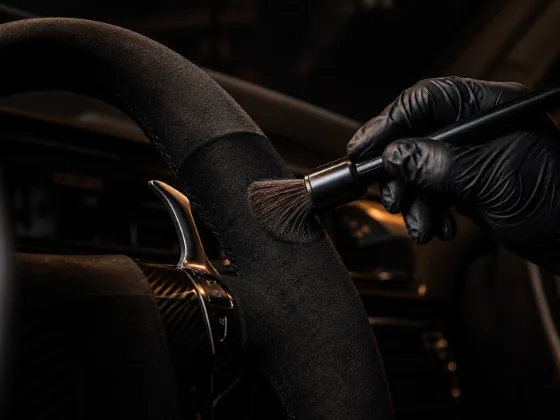
Alcantara has a reputation for being high-maintenance that isn't entirely deserved. Yes, it requires more care than leather or vinyl. But it's more forgiving than most people think if you understand the material and use the right approach. The horror stories — matted nap, water stains, ruined bolsters — almost always come from using the wrong cleaning method, not from Alcantara being inherently delicate.
What Alcantara Actually Is
Alcantara is a branded microfiber synthetic material made from polyester and polyurethane. It's manufactured in Italy by Alcantara S.p.A. and used by essentially every premium automaker for steering wheels, seat inserts, headliners, door panel accents, and sport seat bolsters.
The material has a distinctive soft, slightly brushed surface — the "nap" — that gives it the suede-like look and feel. That nap is what you're managing when you clean it. Anything that crushes or mats the nap makes the surface look wrong, and anything that causes the nap to dry in a distorted direction leaves the material looking streaky or stained even after it's technically clean.
Alcantara is not suede. It's not velvet. It's not microfiber cleaning cloth. Each of those materials has different fiber structures and cleaning requirements. Alcantara-specific technique produces different results from approaches borrowed from any of those materials.
What Alcantara Does to Dirt
The nap traps dust and lint from the environment and transfers oils from skin contact. In high-contact areas — seat bolsters, steering wheel at the 9 and 3 positions, the section of door panel your elbow rests on — body oils penetrate the fibers and darken the material noticeably. Left long enough, this oil contamination attracts more dust and the surface starts to look matted and shiny rather than soft and textured.
Fresh contamination is much easier to deal with than contamination that's been through repeated heat cycles and compression. If you keep up with the material, it stays in excellent condition with relatively minimal effort. If you let it go, recovery takes considerably more work.
What to Use
Cleaning solution: A purpose-formulated Alcantara or suede cleaner, or a very mild upholstery shampoo mixed with water to low concentration. The cleaning solution should be foam or very low-wetness — you want to clean the surface without soaking the material. Soaking drives contamination deeper into the fiber backing and makes drying more difficult.
Do not use alcohol-based cleaners on Alcantara. Alcohol strips the material's texture and can cause color fading. Do not use silicone-based products or leather conditioners — these leave a residue that mats the nap permanently. Do not use dry-cleaning solvent in an attempt to "clean without getting the material wet" — these can damage the polyurethane component of the material.
Brushes: This is where Alcantara cleaning is different from leather or plastic care. You need a soft-bristle brush — a medium-stiffness upholstery brush or a dedicated suede brush — to work cleaning solution into the fiber and to restore the nap after cleaning. The brush does the work. The cloth just removes the residue.
Microfiber: For wiping up cleaning solution after brushing. Choose a low-nap, flat-weave microfiber rather than a fluffy plush microfiber — the long pile on fluffy microfibers catches in the Alcantara nap and drags across it wrong.
The Cleaning Process
Dry vacuum first. Use a soft upholstery attachment to vacuum the Alcantara surface before any liquid goes on. Pick up as much loose dust, lint, and debris as possible. The goal is to remove the surface layer of contamination before you work any moisture into the fiber.
Apply cleaning solution to the brush, not to the surface. Dampen your brush with the cleaning solution rather than spraying liquid onto the Alcantara. This gives you control over how much moisture goes onto the surface. A slightly damp brush is what you want — not a dripping wet one.
Work in the direction of the nap. Brush the surface using short strokes in the direction the nap naturally lies. You'll be able to feel and see the nap direction — it's the direction the surface looks most consistent and even. Working against the nap can cause the fibers to separate unevenly and leave a striped appearance when it dries.
Work in small sections. Clean 6-8 inches at a time, working across the surface in overlapping rows. Don't apply cleaning solution to a large area and let it sit — work a section, wipe it, move to the next.
Wipe with the flat-weave microfiber. After brushing a section, use light strokes with the flat microfiber to wipe away the cleaning residue. Go in the direction of the nap. Light pressure — you're not scrubbing, just removing the surface moisture.
Allow to dry. Let the surface dry naturally. Don't apply heat — a hair dryer or heat gun will permanently damage the nap. The material should dry within 30-60 minutes in normal conditions.
Restore the nap after drying. Once the material is fully dry, go back with a soft, dry brush and brush the nap in one consistent direction across the entire cleaned area. This step is what makes the material look as good as possible after cleaning — it realigns any fibers that dried in the wrong direction and brings back the even, soft texture. Think of brushing suede shoes after cleaning: this step is the same idea.
Handling Specific Stains
Food and drink: Blot immediately — don't rub, don't scrub. Blotting absorbs liquid without driving it deeper into the fiber or spreading it to clean areas. Once you've blotted as much as possible, treat with cleaning solution as described above. The sooner you treat a fresh stain, the less it will set.
Body oil on contact areas (steering wheel, seat bolsters): These areas need regular attention, not just treatment when they look bad. A quick brush-down with a barely-damp soft brush on a regular basis prevents the heavy oil buildup that requires more aggressive cleaning. If the oil has built up and the material looks shiny and dark in those areas, use a slightly more concentrated cleaning solution and give it a few seconds of dwell time before brushing.
Ink: Act immediately. Blot with a clean cloth to pick up as much surface ink as possible before it sets. Apply a tiny amount of isopropyl alcohol on a cotton swab to the stain only — minimal area — and blot (not rub). Isopropyl alcohol is damaging to Alcantara in general use, but for fresh ink staining, targeted application to only the stain spot is sometimes the only option that works. Test in a hidden area first.
Water marks: These appear when water dries on the surface and leaves a mineral deposit ring at the edge of the wet area. Clean the entire affected section (not just the ring) with damp brush and cleaning solution — cleaning just the ring re-deposits the minerals slightly further out. Clean the full section and allow to dry evenly, then restore the nap.
What to Avoid
- Scrubbing: Any aggressive back-and-forth scrubbing motion mats the nap and can permanently damage the fiber structure. The brush strokes should always be light and directional.
- Soaking the material: More moisture doesn't mean cleaner. It means longer drying time, greater risk of water marks, and more potential for contamination to migrate deeper into the backing.
- Circular motions: Always work with the nap. Circular motions create a spiral distortion that shows clearly when the material dries.
- Heat drying: No hair dryer. No heat gun. Allow air drying only.
- Leather conditioner or protectants: These silicone-containing products mat the Alcantara nap permanently.
How Often
Steering wheel Alcantara: monthly attention at minimum for daily-driven cars. The constant skin contact means it accumulates oils quickly.
Seat inserts and bolsters: every 2-3 months for typical use. More frequently if you're in and out of the car often or there are regular passengers.
Headliner Alcantara: as needed — it's exposed mainly to interior air contamination and doesn't get direct contact, so it accumulates dirt more slowly.
Keeping up with Alcantara on a regular schedule is far easier than rehabilitating neglected material. The material that looks the best after five years is almost always the material that's been cleaned consistently every few months, not left until it looked bad.