When most people think about car paint, they picture a coat of color over metal. That's not really how it works — and the gap between that assumption and the reality is why so many well-meaning car owners accidentally damage their paint every time they wash it.
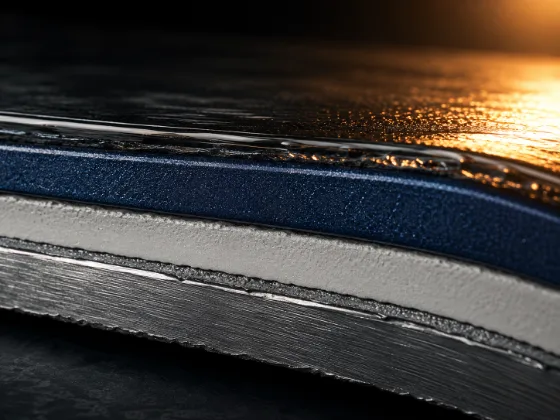
Modern automotive paint is a four-layer system. Each layer has a job. Understanding what those layers are, and why they matter, is the foundation of everything else in detailing.
Layer 1: The Metal (or Plastic)
At the bottom is the substrate — the actual body panel. On most cars, this is steel. On hoods, trunk lids, and some body panels it might be aluminum. Bumpers and some doors are plastic. The substrate itself isn't a "paint" layer, but it matters because everything above it is trying to protect it from moisture, oxygen, and UV radiation. If the layers above fail, the substrate rusts, oxidizes, or degrades.
This is the layer you never want to reach. Once you're at bare metal, you're talking about a respray.
Layer 2: Primer
The first actual coating is the primer. It has two jobs: adhesion and corrosion protection. Primer bonds directly to the metal and gives the base coat something to grip. It also provides a layer of chemical resistance that slows rust if moisture ever gets through a chip or scratch.
Primer is usually 3–4 mils thick (a mil is one thousandth of an inch). You will never interact with primer directly unless a panel has been repainted or seriously damaged. But knowing it's there matters — because a deep scratch that cuts through to primer means your corrosion protection is compromised, not just your cosmetics.
Layer 3: Base Coat
This is where the color lives. The base coat is the pigmented layer — the red, white, silver, black, or whatever color you see on the car. It's applied in thin, even coats and provides no real protection on its own. The base coat is fragile. Without the layer above it, it would oxidize, fade, and degrade within a couple of years of sun exposure.
Base coat is usually 0.5–1.5 mils thick. When body shops do color-matched repairs, this is what they're matching. Slight variations in base coat application are why repair panels sometimes look slightly different in direct sunlight.
Layer 4: Clear Coat
The top layer — and the one that matters most for everything you do as a detailer — is the clear coat. It's a transparent polymer that seals and protects everything below it. The clear coat provides UV resistance, chemical resistance, gloss, and most importantly, hardness.
Clear coat is typically 1.5–2.5 mils thick on a new car. That's roughly the thickness of a human hair. It sounds thin, and it is — but it's doing a tremendous amount of work.
Here's the crucial thing: clear coat is what you can actually see and touch. When a car looks shiny, that shine is coming from the clear coat. When you see swirl marks, you're seeing scratches in the clear coat. When paint looks dull and hazy, the clear coat has oxidized. When you apply wax or a ceramic coating, you're putting it on top of the clear coat.
And when you polish paint, you're abrading away a microscopic layer of clear coat to remove the scratches inside it. This is why over-polishing is such a concern — you can only remove so much material before the clear coat is too thin to protect anything.
What This Means for How You Treat Your Car
Once you understand the four-layer system, a few things click into place.
Every washing scratch is in the clear coat. Swirl marks, fine scratches, marring — these are all in that top 1.5–2.5 mil layer. They look bad, but they're not structural damage. The good news is they can be corrected. The caveat is that correction removes clear coat that can't be replaced.
Protection products live on top of the clear coat, not in it. Wax, sealant, and ceramic coatings all sit on the surface of the clear coat. They don't penetrate or strengthen it — they create a sacrificial barrier that takes the abuse instead of letting it hit the clear coat directly. This is why regular protection makes such a measurable difference over time.
Once the clear coat is gone, it's gone. There's no product you can spray on to restore clear coat. Once you've polished through it or it's peeled and flaked off from prolonged neglect, the only fix is a full repaint. This is why proper washing technique matters — every careless wash that puts scratches in the clear coat is consuming a finite resource.
Heat and UV are the main long-term enemies. The clear coat degrades under UV exposure and heat. This is why cars left in the sun for years develop that chalky, oxidized look. Protection products reduce the UV load on the clear coat, which is why applying them regularly makes such a difference to long-term paint life.
A Quick Word on Single-Stage Paint
Older cars — typically pre-1980s, and some work vehicles — may have single-stage paint rather than the base coat / clear coat system. Single-stage paint is exactly what it sounds like: one layer that contains both color and gloss properties. It's thicker and more forgiving to polish (you can't burn through to a colorless layer), but it oxidizes badly and needs much more frequent attention to stay looking good.
If you're working on a classic car, you'll want to confirm what paint system it has before you start polishing. The approach is different.
The Takeaway
You're not working with "car paint." You're working with a precision layered system where each component serves a specific function. The layer you can touch — the clear coat — is thin, finite, and responsible for everything the car looks like.
Treat it accordingly. That means proper washing technique to avoid adding scratches. Regular protection to slow UV degradation. And measured, careful correction when it's needed — not aggressive polishing because aggressive is faster.
Everything else in detailing makes more sense once you have this picture in your head.