
Decontamination is one of the most important steps in detailing — and one of the most skipped, because contamination is largely invisible until it causes obvious damage. By the time you can clearly see iron staining or heavy fallout, the contamination has already been eating into your paint for months or years. Learning to identify contamination early, before it becomes visible damage, protects both your paint and your investment in any protection you apply over it.
What Paint Contamination Actually Is
Paint contamination falls into two main categories, and they require different removal methods:
Physical contamination — particles that are stuck to or embedded in the paint surface but not chemically bonded to it. Tree sap residue, road film, industrial fallout particles, bonded dirt. These are removed mechanically with clay bar, clay mitt, or similar decontamination tools.
Chemical contamination — particles that have bonded chemically to the paint surface, particularly iron particles from brake dust and industrial fallout. These can't be mechanically lifted without significant force; they need a chemical that dissolves the bond first. Iron-specific chemical removers are the solution here.
Most real-world cars have both types at the same time. Full decontamination addresses both.
The Tests
Test 1: The Fingertip Test
Run your bare fingertips lightly across a clean, dry painted panel. If the paint feels perfectly smooth — like glass — it's relatively free of physical contamination. If it feels rough, gritty, or like 600-grit sandpaper, that's physical contamination you're feeling.
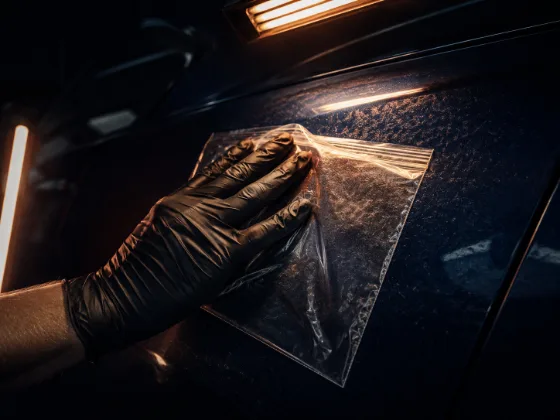
For better sensitivity, use the plastic bag test: put your hand in a clean plastic bag and drag it across the panel. The plastic reduces friction enough that you can feel contamination that your bare fingers might miss. Glass-smooth through the bag means clean paint. Any texture means contamination present.
This test tells you about physical surface contamination. It does not tell you about iron contamination, which is chemically embedded rather than sitting on the surface.
Test 2: Visual Inspection for Iron
Iron contamination from brake dust is the most common and most damaging type of chemical contamination. Here's how to spot it:
Orange or rust-colored specks: The classic sign. Tiny orange, rust, or brown dots embedded in the paint surface, wheel paint, or on trim pieces. These are iron particles that have oxidized after embedding in the paint. They range from barely visible to clearly speckling on white or silver paint. On dark paint, they're harder to see directly but are revealed by other signs.
Dulling or hazing of paint gloss: Heavy iron contamination creates a layer of embedded particles that disrupts the reflectivity of the paint surface. The paint may look less glossy or appear to have a haze despite being clean and dry. This is particularly visible in direct sunlight or under an inspection light.
Wheels: Wheels pick up the most iron contamination. If your wheels have orange or rust staining that doesn't come off in a wash, that's iron. If the brake caliper area of the wheel shows rust-colored accumulation, heavy iron contamination is present.
Test 3: Chemical Iron Revealer
Iron remover products contain a chemical called sodium thioglycolate (or similar compounds) that reacts specifically with iron particles to form a water-soluble complex that bleeds a characteristic purple or burgundy color. When you spray iron remover on contaminated paint and watch it turn red-purple within a minute or two, you're watching the iron contamination react.
This is the definitive test. Even on paint that passes the visual inspection — no visible orange specks, no apparent hazing — a purple bleed reaction from iron remover means iron contamination is present. The more intense and rapid the reaction, the higher the contamination load.
Use iron remover across the whole car, not just the wheels. The front of the car (catching brake dust thrown forward by the road) and the lower third of the body (road level) typically show the heaviest reaction, but fallout from the environment affects paint everywhere — roof, hood, upper panels, all of it.
Test 4: Clay Bar Feedback
After washing and before claying, run a fresh piece of clay across a panel with appropriate lubricant. On clean paint, the clay glides without resistance and stays relatively clean. On contaminated paint, the clay grabs and drags, and the discoloration it picks up is visible in the clay itself. Heavy contamination leaves the clay dirty within a few strokes.
This test gives you continuous real-time feedback as you work. But it also has a limitation: clay bar is most effective on physical contamination. Iron contamination that's chemically bonded to the paint surface doesn't transfer to clay as readily. Run iron remover first, then clay — the iron remover dissolves the chemical bond, and the clay removes whatever is physically present afterward.
Environmental Clues: High-Risk Situations
Some environments accelerate contamination dramatically. If your car is regularly in these situations, assume decontamination is needed more frequently:
Urban environments with heavy braking traffic: Brake dust fallout is proportional to how much braking is happening nearby. City driving, intersections, stop-and-go traffic — these environments have high airborne iron from brakes on every vehicle around you, not just your own.
Near airports or industrial areas: Aircraft use high-iron-content alloys in their brakes, and the fallout radius around airports is significant. Industrial areas with metal fabrication, welding, or metalworking produce airborne particles that settle on every surface in the area.
Near railway lines: Train brakes are especially heavy iron sources. If your car parks within a kilometer of a train track, iron contamination accumulates significantly faster than average.
Coastal environments: Salt air creates a different contamination profile — mineral deposits from sea spray, corrosion acceleration, and the combination of salt and iron contamination producing particularly aggressive surface damage.
Areas with high tree canopy: Tree sap, pollen, and organic matter create a different type of contamination. Pollen particularly bonds to paint and embeds in clear coat with exposure to moisture and UV.
Time-Based Indicators
Even without visible signs or high-risk environments, time alone should prompt decontamination:
For a car driven daily in normal conditions, full decontamination (iron remover plus clay) makes sense every six months — ideally as part of your seasonal protection schedule, before applying or refreshing your paint protection in spring and fall.
For a car in a high-contamination environment (airport proximity, near railway, heavy urban traffic), quarterly decontamination may be warranted. Iron contamination that's left embedded long enough begins to oxidize and migrate deeper into the clear coat, where it's harder to remove and causes more visible damage.
For any car before applying new protective product — wax, sealant, or ceramic coating — decontamination is mandatory regardless of visual condition. Sealing contamination under protection accelerates damage to the paint beneath it.
After You've Applied Protection
Cars with wax, sealant, or ceramic coating still accumulate contamination — the protection layer just slows the process. The wax or sealant layer traps iron particles before they reach the paint, but eventually they saturate the protection layer and begin working through it.
A ceramic-coated car still needs iron treatment and clay bar periodically. The coating makes the decontamination easier (fewer particles are actually reaching the paint through the coating), but it doesn't make the process unnecessary. Think of it as maintaining the protection layer itself, not just the paint.
What Happens If You Skip It
Iron particles embedded in paint oxidize and expand as they rust. Expanding rust particles in clear coat create micro-fractures — starting as cosmetic specks and progressing to pitting if left long enough. Paint spots that start as small contamination sites can become small rust blisters that push through the clear coat and into the basecoat.
Physical contamination that's never removed becomes encapsulated and eventually impossible to remove without paint correction. Bonded tree sap oxidizes and etches through the clear coat under it.
Early decontamination is inexpensive and quick. Late decontamination requires polishing to address damage. Missed decontamination entirely leads to paint damage that requires body shop intervention.
The Simple Rule
If the fingertip test shows any texture, clay it. If an iron remover turns purple, you have iron to treat. If either of those conditions exists before you apply any protective product, decontaminate first. And if you haven't decontaminated in the last six months, assume it's time regardless of what the tests show — because the tests are revealing surface contamination, while the iron remover is telling you about what's chemically bonded at a level below what you can feel.