This is one of the most common questions people have before their first ceramic coating application. The worry makes sense: polishing is extra work, extra cost, and another step where something can go wrong. But the stakes are real — ceramic coatings are semi-permanent, and whatever surface they go on top of gets locked in for years.
So let's actually answer the question properly.
Why Polishing Matters with Ceramic Coatings
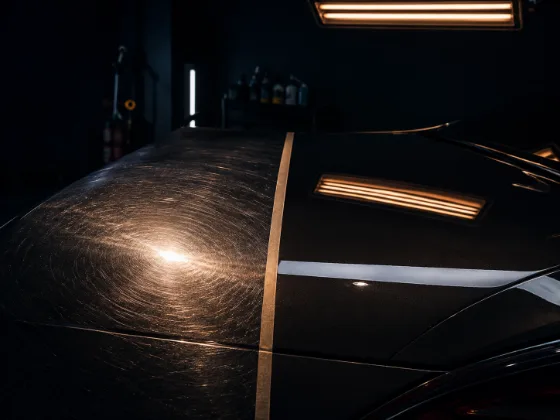
A ceramic coating is transparent. It follows the surface it bonds to. If the clear coat underneath has swirl marks, scratches, water spot etching, or oxidation, those defects will be visible through the coating. In many cases they'll be more visible, because the high gloss and reflectivity of the coating makes the surface look like a mirror — and mirrors show every flaw.
People make the mistake of thinking they can hide defects under a coating. The opposite is closer to true: a ceramic coating amplifies whatever the surface looks like beneath it. Flawless paint under a ceramic coating looks extraordinary. Scratched or swirled paint under a ceramic coating looks like scratched and swirled paint, with more gloss, highlighting the damage even more.
The second issue is permanence. You can wash off a spray wax in one pass. A sealant comes off with a few degreaser washes. But a properly bonded ceramic coating isn't coming off without polishing. If you apply a ceramic coating over paint defects and decide you want to correct them later, you have to polish through and remove the coating, correct the paint, and then start the whole application process again. That's hours of work and hundreds of dollars of product — for a mistake that could have been avoided.
The Decision Framework
Whether you need to polish before coating comes down to two questions:
1. What is the current condition of the paint?
2. What is the intended goal — and what's good enough?
Not every car needs paint correction before a ceramic coating. A brand-new vehicle with perfect paint fresh from the dealer doesn't need polishing — it needs decontamination, an IPA wipedown, and then the coating goes on. Polishing a perfect paint job removes clear coat for no benefit.
But most cars driven more than a few thousand miles have some combination of wash-induced swirl marks, light scratches, water spot etching, or oxidation that will be visible under a ceramic coating.
How to Evaluate Your Paint Honestly
The tool you need for an honest assessment is a good inspection light — either a dedicated detailing light or a bright LED torch held at a low angle to the panel. You cannot evaluate paint condition in diffused overhead lighting in a garage or, worse, in sunlight (which hides more than it reveals).
With your inspection light, check:
Swirl marks — circular fine scratches that look like a web of spider lines when light hits them at an angle. Almost universal on cars that have been washed at automatic car washes or with dirty mitts.
Buffer trails / holograms — linear or curved scratch patterns from improper machine polishing. Look like swirls but with more directionality.
Water spot etching — slight depressions or raised marks where water sat and etched the clear coat. The spot might look clean but the surface is textured.
Scratches — check how deep they are. Light scratches that catch the light but don't catch a fingernail are in the clear coat and polishable. Scratches that snag your fingernail are into or through the clear coat and may not be fully removable without wet-sanding.
Oxidation — haziness, cloudiness, or dullness in the paint surface that polishing and compounding addresses. Common on cars that have gone years without paint protection, parked outdoors.
After your inspection light assessment, do the plastic bag test on a section: put your hand in a plastic bag and slide it across the paint. Smooth means the surface is clean. Rough or gritty means bonded contamination is present (a decontamination and clay issue, not a polishing issue — see the decontamination guides).
The Three Scenarios
Scenario 1: New or Near-Perfect Paint
No visible swirl marks, scratches, or defects under inspection light. Decontaminate, IPA wipe, coat. No polishing needed.
Scenario 2: Light Swirls and Minor Defects
Light swirl marks visible under inspection lighting, no deep scratches, no oxidation. You have a choice to make based on your standards.
If you're a casual detailer and a slight swirl pattern doesn't bother you, you can skip polishing and accept the result. The coating will still protect the paint and provide the durability and hydrophobic benefits — you just won't have correction underneath it.
If you want the best possible result, a single-stage polish with a machine polisher removes light swirls efficiently and leaves the paint ready for a coating that will make those corrections permanent and protected.
Scenario 3: Heavy Defects, Scratches, Oxidation
Significant swirl marks, visible scratches, water spot etching, or oxidation. Polish before coating. This is not optional if you care about the result.
Heavy defects require multi-stage correction — starting with compound for material removal and finishing with polish to remove the scratches the compound creates. The total surface you're presenting to the coating should be as close to flawless as your time, skill, and paint thickness will allow.
The Order Always Matters
If you're going to polish and coat, the order is non-negotiable:
- Wash thoroughly
- Chemical decontamination (iron remover, then degreaser pre-wash if needed)
- Clay or mechanical decontamination
- Polish / paint correction
- IPA wipedown
- Ceramic coating application
You do not polish after coating — you'd destroy the coating. You do not coat before decontamination — you'd seal contamination under the coating. Decontamination comes before polishing because polishing over contaminated paint embeds contamination into the surface.
What About Spray Ceramics?
Spray ceramic coatings — the kind applied to a wet or dry panel after washing, or added to a rinse bucket — are a different category. They don't create the same bonded glass matrix as a dedicated ceramic coating product, and their durability is measured in weeks to months rather than years.
For spray ceramics, the polishing question is less critical because the product is on a maintenance cycle anyway. A spray ceramic is basically a long-wearing sealant with some ceramic chemistry — it benefits from clean, decontaminated paint, but the commitment is much lower and you're not locking any surface condition in for years.
Paint Thickness and Your Polishing Budget
Every time you polish, you remove a small amount of clear coat. The clear coat is typically 40 to 80 microns thick, and you can only remove so much before it gets dangerously thin or fails. This is the fundamental limit on how much correction is possible and how many times you can correct the same car.
Before any significant paint correction, a paint thickness gauge (PTG) tells you exactly how much clear coat you're working with and whether specific panels have been previously corrected or have thinner-than-standard paint. Polishing blind on a car with unknown paint history carries risk. On a car you know has original, uncorrected paint, a single-stage polish before ceramic typically consumes 3–8 microns — well within the margin for most vehicles.
The Honest Answer
You don't have to polish before a ceramic coating. But you should seriously evaluate the paint condition, understand what you'll be locking in for years, and make a deliberate decision rather than an assumption. For most daily drivers with real-world miles on them, at least a single-stage polish pass significantly improves the final result and is worth the extra few hours of work before committing to a semi-permanent coating.