
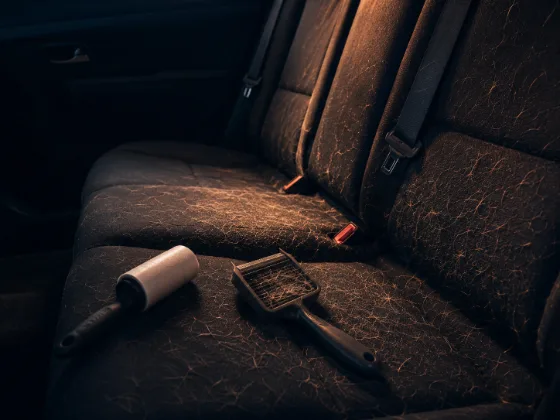
Pet hair in a car is a different problem than pet hair on a hardwood floor. On a smooth surface, a vacuum or a quick wipe picks it up easily. In automotive carpet and upholstery, the hair weaves into the fibers and locks itself in. The more it gets walked on and sat on, the deeper it goes. A standard vacuum with a bare floor attachment might not move it at all.
The good news is that pet hair removal is a solved problem once you understand the mechanics. A few specific tools work extremely well. Most of the others don't.
Why Vacuuming Alone Usually Fails
Standard vacuum suction works by creating airflow that lifts particles off the surface. Pet hair embedded in carpet fibers is held in place by the fiber structure itself — suction pulls through the hair rather than pulling the hair out. You can feel this when you vacuum a heavily pet-haired carpet and the vacuum barely picks anything up despite running hot.
The solution is agitation — physically loosening the hair from the fibers before or during vacuuming. Once the hair is freed from the fiber structure, suction can pick it up. Without agitation, you're fighting the physics of how the hair is embedded.
What Actually Works
Rubber squeegee or rubber brush. This is the most effective tool for pet hair removal from carpet and fabric seats. Rubber creates static electricity as it moves across fabric, which attracts hair. More importantly, the rubber edge catches embedded hair fibers and drags them up out of the carpet pile as you pull it across the surface. Use short, firm strokes in one direction — you'll see the hair balling up and rolling ahead of the tool. Then vacuum it up.
Dedicated pet hair squeegees are sold for this purpose, but a standard window squeegee with a rubber blade works almost identically. The key is rubber — silicone blades and plastic edges don't generate the same static attraction and don't catch hair the same way.
Pumice stone / pet hair stone. These look like natural lava rock and work through abrasion and texture. Drag the stone lightly over carpet or upholstery and the porous surface grabs hair and rolls it into clumps. They're highly effective on carpet but can be too aggressive for fine upholstery fabrics if you press too hard. Light pressure, short strokes.
Rubber gloves. Damp rubber gloves — any dish gloves or latex gloves lightly moistened — work well on seat fabric. The rubber creates static attraction as you wipe your hand across the surface, and the hair sticks to the glove rather than the seat. Rinse the glove periodically as it loads up. This is slower than a squeegee on large areas but extremely precise for getting into seat crevices and around headrests where a tool won't fit.
Fabric brush with stiff nylon bristles. Stiffer than a typical interior detailing brush, these work by mechanical agitation — the bristles reach into the carpet pile and physically move the embedded hair to the surface where it can be vacuumed. Works better than squeegee on very deep carpet pile but less well on flat upholstery.
Lint rollers. Effective on upholstery but slow on heavily haired carpet. Great as a final pass to pick up surface hair after you've done the main removal work with a squeegee or brush. The adhesive sheets pick up fine hair and dander that other tools leave behind.
Tools That Don't Work Well
Standard vacuum with bare floor attachment. As described — suction alone on embedded hair. You'll move some surface hair but leave the embedded stuff behind.
Duct tape or packing tape. Only picks up surface-level hair. Anything embedded in the fiber is untouched. Also not practical over large areas.
Compressed air. Blows hair around the car, potentially driving it deeper into carpet. Makes the problem worse, not better.
Steam cleaners without agitation. Steam loosens hair slightly but doesn't remove it. You still need agitation and vacuuming after steaming to actually extract the hair.
The Correct Sequence
Doing these steps in the right order saves you from having to repeat them.
1. Start with the rubber squeegee on carpet and floor mats. Use firm, short strokes in one direction, working from the back of the vehicle forward. Hair will clump into rows and balls ahead of the tool. Don't vacuum yet.
2. Do the seats next. Rubber squeegee on flat seat surfaces. Rubber gloves or a lint roller for crevices between the cushion and the backrest, around the seat base, and along the door panel fabric. Push hair down toward the floor rather than into the seat crevices.
3. Now vacuum. With everything agitated and loosened, vacuum with a crevice tool to get along the seat track and door sills first — those tend to collect the hair that falls from seats. Then go over the carpet and floor mats with a brush-roll attachment if you have one, or the standard floor attachment. The hair should lift easily now that it's been freed from the fiber structure.
4. Final pass with lint roller. Wipe down the seats and carpet edges where the vacuum may have missed fine hair. You'll be surprised how much this picks up even after thorough vacuuming.
The Crevice Problem
The hardest place to get pet hair is the gap between the seat cushion and the seat back, and the gap between the seat and the center console or door panel. Hair falls in there and accumulates over months. No squeegee fits. No lint roller reaches.
The most effective approach: use a flexible crevice tool on the vacuum to get as deep as possible, then use a plastic trim removal tool (a thin, flat pry tool) wrapped with a rubber band to hook and drag hair out of the gap. Not elegant, but it works. Some detailers use a long-bristle brush to work the gap first, then vacuum.
Dealing with Odor
Pet hair is just the visible part of the problem. The dander, oils, and other organic material that comes with pet hair absorbs into fabric and can create persistent odor even after the hair is removed. A fabric deodorizer or enzyme-based cleaner applied to the carpet and fabric seats after hair removal addresses this. Enzyme cleaners break down the organic compounds that cause pet odors — standard air fresheners just mask them and the odor returns.
After cleaning and deodorizing, leave the car with windows slightly open for a few hours if possible. Airflow helps a lot with residual pet odor.
Prevention
The only thing that works for prevention is physical barriers. Seat covers designed for pet use create a washable layer between the pet and the upholstery. Cargo area covers or blankets for dogs that ride in the back prevent carpet saturation. These aren't detailing solutions, but they're worth knowing about if you're doing this kind of cleanup regularly — they drastically reduce how much hair gets embedded in the first place.
For ongoing maintenance between full cleanings, a quick pass with a rubber brush and a vacuum after every few rides keeps hair from accumulating to the point where it requires a dedicated session. Ten minutes every week or two is easier than an hour every few months.