
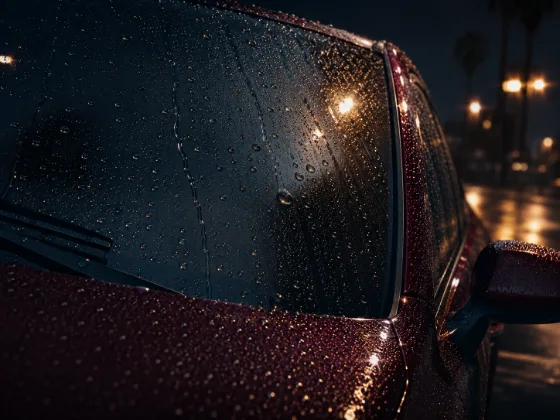
Rain-repellent glass coatings have been around since the early 1990s when RainX popularized the category. The claim — that a treated windshield sheds water so effectively that you barely need wipers at highway speeds — sounds almost too good. And like most things that sound too good, the reality is more nuanced. These coatings do work, but within specific conditions and with tradeoffs that are worth understanding before you apply one.
The Chemistry: Why Water Beads on Treated Glass
Untreated glass is hydrophilic — it has a natural affinity for water. Water spreads into a thin, wide film across untreated glass because the water molecules are more attracted to the glass surface than they are to each other. This is why rain creates a continuous sheet on an untreated windshield rather than beading up.
Rain-repellent coatings work by converting the glass surface from hydrophilic to hydrophobic. The coating deposits a layer of molecules that have two components: one end that bonds to the glass surface, and one end that repels water. Water molecules in contact with the treated surface are more attracted to each other than to the coating, so they pull together into spherical droplets rather than spreading. This is the beading effect.
Two main chemistries dominate the market: fluoropolymer-based (like traditional RainX) and silane/siloxane-based. Fluoropolymer coatings were the original technology and work well but require more frequent reapplication. Silane-based coatings bond more permanently to the silica in the glass surface and last longer, making them the basis for most premium and ceramic glass coatings.
When Rain-Repellent Coatings Actually Help
The marketing images show rain beading off a windshield at highway speeds without wipers. That's real — but it requires specific conditions.
Highway speed in moderate rain. This is the ideal condition for a rain-repellent coating. At 60+ mph, the airflow across the windshield is fast enough to physically push water droplets off the glass surface. Combined with the low adhesion of a hydrophobic coating, the droplets roll off before they can spread or accumulate. Visibility in this condition is significantly better on a coated windshield than an uncoated one. Wipers may be unnecessary or can run at a lower speed setting.
Reducing wiper streak and chatter. Wiper blades on coated glass operate differently than on bare glass. The squeegee passes over water beads rather than a thin film, and the contact surface between the wiper and the glass is reduced. For many people, the wiper operation is smoother and streak-free on coated glass. This is a meaningful daily benefit even if you're not seeing the dramatic "no wipers needed" effect.
Light mist and drizzle. Light precipitation that isn't heavy enough to justify running wipers continuously is where rain-repellent coatings are most useful. Light drizzle beads up and rolls off without wipers, or requires only intermittent use rather than continuous.
When Rain-Repellent Coatings Don't Help Much
Low speed in heavy rain. At parking lot speeds or in stop-and-go traffic in a downpour, airflow across the windshield isn't fast enough to push water off. Droplets bead up but sit on the glass rather than rolling away. The beading effect is actually less effective at providing visibility than a thin water film in this condition — a thin film at least doesn't distort through individual droplets. At low speed in heavy rain, you need wipers regardless of coating.
Wiper-dominated driving. If your driving is primarily urban and slow-speed, the rain-repellent effect will matter less. The benefit is most pronounced at highway speeds where the airflow can do the work.
Contaminated glass. Rain-repellent coatings work best on clean glass. Oil contamination, road film, and bug splatter reduce the hydrophobic effect because the coating's surface chemistry is disrupted. A treated windshield that hasn't been cleaned in a month will bead water noticeably less than one that was just cleaned and freshly treated.
How Long Do They Last?
This varies significantly by product type:
Consumer-grade spray-on treatments (traditional RainX style): 1–4 weeks in typical driving conditions. Easy to apply, need to be reapplied frequently. Performance degrades noticeably as the treatment wears down.
Polymer-based glass sealants: 3–6 months. Require more thorough glass preparation to apply correctly but provide more durable coverage. Performance is more consistent over the application period.
Ceramic glass coatings applied by detailers: 1–3 years. These create a chemical bond with the silica in the glass rather than just sitting on the surface, making them significantly more durable. The initial application requires clean, decontaminated glass and proper cure time, but the longevity justifies the setup.
All rain-repellent treatments wear faster in areas with frequent use of washer fluid (the soap in the fluid degrades the coating), in hotter climates (UV exposure and heat accelerate coating degradation), and on cars where wipers run frequently (physical abrasion from the wiper blade wears the coating).
Application Matters More Than Product
The most common reason rain-repellent coatings underperform is poor glass preparation before application. The coating needs to bond to clean glass — not to contamination, water spots, or existing product residue. Applying a rain-repellent coating to glass that hasn't been thoroughly cleaned and decontaminated first produces a coating that bonds weakly and wears off quickly.
Proper prep: clean the glass with a dedicated glass cleaner, then decontaminate if needed with a glass polish or clay bar to remove water spots and mineral deposits, then apply the coating to completely dry, clean glass. The extra 10 minutes of prep is the difference between a coating that lasts as advertised and one that's gone in two weeks.
The Wiper Compatibility Question
There's a persistent claim that rain-repellent coatings are hard on wiper blades — that the beading effect causes the wiper to skip and chatter rather than wipe smoothly. This does happen, particularly with budget wiper blades on heavily coated glass. Premium wiper blades — especially those designed specifically for hydrophobic glass — resolve this problem. If you're using coated glass regularly, it's worth upgrading to a wiper blade that's spec'd for hydrophobic surfaces.
The Honest Assessment
Rain-repellent glass coatings do what they claim, within their conditions. At highway speeds in rain, they provide a meaningful visibility improvement. In light drizzle, they reduce or eliminate the need for wipers. As a maintenance coating that makes glass easier to clean and reduces water spot formation, they provide ongoing value even on dry days.
They are not magic. They don't eliminate the need for wipers in heavy rain at low speed. They need reapplication to maintain performance. And they require clean, well-prepared glass to work correctly.
Used with realistic expectations and proper preparation, a rain-repellent coating is one of the genuinely useful glass treatments available — particularly for anyone who does significant highway driving in variable weather.