
Tire dressing flung onto your freshly washed paint is one of the most frustrating results of a detail. Brown streaks up the door panels, spots on the lower quarter panels, a greasy mess on paint you just spent an hour on. It happens to beginners and experienced detailers alike, and it almost always comes down to one of three application mistakes — too much product, applying to the wrong surface, or not allowing enough cure time before driving.
Why Tire Dressing Flings
When a tire rotates at speed, any liquid on the tread surface or sidewall is subject to centrifugal force. The liquid wants to fly outward — off the tire and onto whatever is nearby, which is usually your wheel well and lower paint. The amount of fling depends on two factors: how much excess product is on the tire, and how quickly the product cures or absorbs into the rubber.
Tire dressings are designed to sit on the surface of the rubber and provide a protective, cosmetic coating. Some are water-based and dry to a matte or satin finish. Some are solvent-based and stay wet-looking for longer. The solvent-based products are more prone to fling because they stay wet and mobile longer.
The error isn't usually applying the wrong product. It's applying too much of it to the wrong surface, and then driving before it has time to do anything other than spin off.
The Surface Preparation Step Most People Skip
Tire dressing applied to a dirty or dusty tire doesn't bond to the rubber — it bonds to the contamination on top of the rubber. That contamination isn't well-adhered to the tire, so the dressing and the dirt layer can separate from the tire together during driving. This shows up as brown fling instead of black.
Tires need to be clean before any dressing is applied. Not just rinsed — scrubbed. Old tire dressing residue, brake dust, and road grime create a layer between the tire and the new product. A stiff tire brush and a degreasing cleaner used during the wash step should remove this contamination. After rinsing and before the car is dry, the tires should be clearly clean black rubber with no brown residue or product buildup visible.
Let the tire dry before applying dressing. Applying dressing to a wet tire dilutes the product and prevents it from bonding properly to the rubber.
Product Type and Application Amount
Tire dressings broadly fall into two categories:
Water-based tire dressings dry down to the rubber surface relatively quickly, provide a matte to satin finish, and have significantly lower fling potential. They're less prone to the heavy, greasy shine that some people dislike, and they're more forgiving of slight over-application. Water-based dressings are the better choice for anyone who drives shortly after application or who has had persistent fling problems with other products.
Solvent-based or gel tire dressings provide the high-gloss wet shine that many people associate with tire dressing and often last longer. They're more prone to fling if over-applied or if driving starts before the product has adequately cured. If you want this type of product, the solution is very light application and longer wait time — not switching products.
Regardless of type, less is more. A thin, even coat is the goal. Visible drips, pooling in tread grooves, or product that you can see glistening on the sidewall in excess is too much.
Application Method: Foam Applicator vs. Spraying
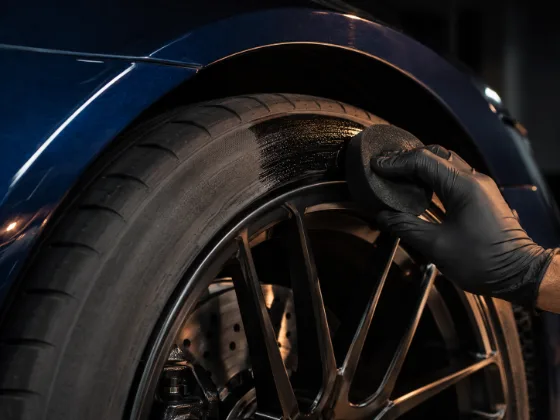
Foam applicator pad: Apply the product to the foam applicator, not directly to the tire. Work the product into the applicator so it's evenly distributed and the applicator is damp, not dripping. Then wipe across the tire sidewall in a back-and-forth motion, covering the full sidewall. Avoid getting product on the tread — it's not needed there and it affects traction before it cures.
The foam applicator gives you control over how much product contacts the tire, and it keeps the product on the sidewall where it belongs rather than spraying it everywhere.
Spraying directly onto the tire: More product ends up on the ground, in the wheel well, and potentially on the brake rotor than on the tire sidewall. Spray application requires immediately wiping with a separate applicator or towel to distribute the product — it's not a spray-and-walk-away method. If you prefer spraying, spray onto the applicator pad.
After applying with the foam applicator, do a wipe-down with a clean, dry microfiber towel over the sidewall. This step is often skipped and it's important: the dry towel picks up the excess product that didn't absorb into the rubber. What you're removing now won't fling later.
The Wipe-Down Step
This is the single most effective technique for eliminating tire fling. After the product has been applied and has sat for a minute or two on the tire, take a clean microfiber towel and firmly wipe down the entire sidewall. The towel will come away with visible product residue. What you're leaving on the tire is a thin, absorbed coating. What you're removing is the excess that would otherwise fly off at speed.
Some detailers call this "buffing" the tire dressing, by analogy to buffing a wax. The concept is the same — you apply more than what will cure/absorb, then remove the excess before it causes problems.
Don't skip the wipe-down because you think the tire "doesn't look shiny enough." The shine comes from a thin, well-distributed coat, not from excess product sitting on the surface.
Cure Time Before Driving
If possible, let tire dressing cure for at least 30–60 minutes before driving. During this time, the product is cross-linking with the rubber surface or absorbing into the top layer of the tire compound. Product that's had time to cure is chemically bound to the rubber and won't spin off. Product that hasn't had time to cure is still wet and mobile.
If you applied dressing and are driving immediately, you haven't done anything wrong from a technique standpoint — you just haven't given the product time to do its job. The wipe-down step becomes even more important if you're driving shortly after application. Remove as much excess as possible before you roll.
When Fling Has Already Happened
Tire dressing on paint leaves oily, brown or black streaks that are greasy to the touch. They don't come off easily with car shampoo alone — the dressing is designed to resist water.
Remove tire dressing fling with an isopropyl alcohol spray or a dedicated paint decontamination spray applied to a microfiber towel. Wipe the affected area until the grease is gone, then wash and re-protect the paint in that area. Don't try to polish tire dressing off — polishing drives it further into the surface and you'll still need to degrease before the polish works.
After cleaning the fling, revisit your application and add the wipe-down step before the next drive. Problem solved.
Tread Black: Don't Apply Dressing There
Tire dressing belongs on the sidewall. The tread surface — the part of the tire that contacts the road — should not have dressing applied. Dressing on the tread is both a fling source and a minor traction concern until it wears off. The sidewall is what's visible when the car is stationary and what you're coating for cosmetic and protection purposes. Stay off the tread grooves.