
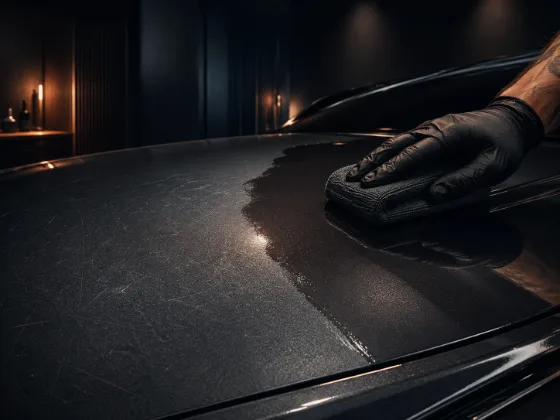
Glaze and polish are two of the most misused words in detailing. Ask ten different people what a glaze is and you'll probably get five different answers, some of which are descriptions of a polish. The confusion is real, and it causes real problems — people use the wrong product for the situation, either getting results they didn't want or missing results they could have had.
This is a clear, simple breakdown of what each product actually does and when to use each one.
What a Polish Does
A polish is an abrasive product. It contains fine cutting agents — typically aluminum oxide or other abrasive compounds of specified grit sizes — that physically abrade the surface of the clear coat. The polishing process levels out imperfections by removing tiny amounts of the clear coat surface uniformly, which eliminates the swirl marks, fine scratches, and surface haze that live in the top layer of the clear coat.
After polishing, the imperfections are gone because the material they were in has been removed. The paint looks better because the surface is more uniform and light reflects off it more evenly.
Polish is a correction product. It fixes damage. But it does that by removing clear coat material — which is finite. You only have so much clear coat to work with, and every polishing session takes some of it away. Heavy compounds (sometimes called cutting compounds) are more aggressive versions of this — they remove more material faster. Light polishes are less aggressive and produce finer finishes.
What a Glaze Does
A glaze is a filling product, not a cutting product. It contains no abrasives. Instead, it contains oils, polymers, and sometimes kaolin clay or similar fillers that flow into micro-imperfections in the clear coat surface and fill them temporarily.
The mechanism is completely different from polishing: a glaze doesn't remove the clear coat — it fills the gaps. Swirl marks and fine scratches appear to disappear because the filler material fills them in and creates a more uniform surface for light to reflect off. The actual scratches are still there underneath. The glaze is making them invisible temporarily.
"Temporarily" is the key word. Glazes don't last. Once the oils and fillers wash out or evaporate, the original imperfections are visible again. Most glazes last a few weeks at best, some less. They're not a substitute for polishing — they're a temporary enhancement.
Why Anyone Would Use a Glaze
If glazes don't permanently fix paint, why do they exist? A few legitimate reasons:
Show prep. When you need paint to look perfect for a show or event in the next few days and you either don't have time to polish properly or the paint can't afford more correction, a glaze gives you a temporary result that's often indistinguishable from a freshly polished finish in the short term.
Paint that's too thin to polish. Clear coat has limited depth. An older repainted panel, or paint that's been aggressively corrected many times, may not have enough remaining clear coat to safely polish again. A glaze gives you the visual improvement of correction without the material removal risk.
Before a sealant or wax, after polishing. Some professional detailers use a glaze between the polishing step and the protection step to fill any remaining micro-marring from the polish itself and add depth to the finish. Applied this way, the glaze is a finishing step that enhances the polished result rather than a substitute for polishing.
Enhancing depth and gloss on older paint. Some glazes contain conditioning oils that temporarily restore softness and flexibility to older, slightly dried-out paint. On an older vehicle that hasn't been corrected, a glaze can make a noticeable visual improvement quickly.
The Confusion: Why People Mix These Up
There are a few reasons these products get confused so consistently:
Brand naming inconsistency. Some products are called "polishing glaze" or "finishing glaze" or "color enhancing polish" — names that blur the category lines. A product labeled "polish" may contain fillers and behave more like a glaze. A product labeled "glaze" may contain very mild abrasives. Read the product description carefully rather than relying on the name.
Both make paint look better temporarily. A glaze and a fresh polish both produce shiny, improved-looking paint. If you don't know what you're looking at, the results look similar. The difference shows up weeks later when the glaze washes out and the swirls come back.
Old-school terminology. In older detailing literature and some professional circles, "glaze" is sometimes used loosely to mean any pre-wax treatment. This historical usage doesn't match the modern product category and creates confusion when modern products are involved.
Which One Do You Need?
Your paint has visible swirl marks, scratches, or oxidation that you want to permanently fix: You need a polish (or compound, depending on severity). The damage needs to be corrected by removing the damaged layer of clear coat. A glaze will make it temporarily invisible but won't solve the underlying problem.
You need paint to look exceptional for a short-term event: A glaze is appropriate. It's faster to apply than a full polish, low risk, and produces results that last long enough for your purpose.
Your paint is too thin for more polishing but still has imperfections: A glaze is the right tool. Polishing further risks burning through the clear coat. A glaze gives you visual improvement without the risk.
You just polished and want to maximize the final result before sealing: A glaze as a finishing step after polishing is appropriate. Make sure the glaze is compatible with your intended sealant or wax — some glazes contain silicone or oils that can interfere with certain protection products.
Glazes and Protection Products
One important note: most glazes don't provide protection by themselves. They're not UV barriers, they don't resist contamination, and they don't have meaningful durability. A glaze step needs to be followed by a protection product — wax, sealant, or ceramic coating — applied over the top.
Some glazes are compatible with all protection products. Some are not — certain oil-heavy glazes can prevent sealants and ceramic coatings from properly bonding to the clear coat. If you're using a glaze before a high-end sealant or ceramic coating, check compatibility with the coating manufacturer's recommendations. Many ceramic coating brands specifically exclude any glaze or oil treatment before coating application.
The Practical Bottom Line
Polish corrects. Glaze fills. Glaze results are temporary, polish results are permanent (until the paint is damaged again). Use a polish when you need actual correction. Use a glaze when you need a temporary enhancement or when polish isn't an option. Understand the difference and you'll choose the right tool every time — and never be fooled into thinking a glaze "fixed" anything when the swirls come back six weeks later.