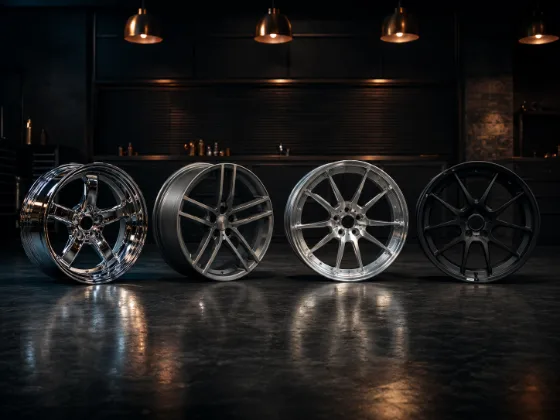
Wheels look like wheels. But walk around any parking lot and you're looking at a half-dozen different finishes — some that tolerate almost any cleaner, others that will pit, strip, or dull if you use the wrong product. Knowing what you have is the first step to cleaning it correctly.
Clear-Coated Alloy: The Most Common Finish
The majority of factory wheels on cars built in the last fifteen years are aluminum alloy castings with a painted or machined face, then clear-coated on top. The clear coat is the part that matters most — it's a thin layer of automotive-grade clear paint that protects everything underneath it from oxidation, brake dust bonding, and UV damage.
Clear-coated wheels are the most forgiving to clean. Most pH-neutral wheel cleaners, iron removers, and spray detailers are safe on them. The clear coat takes the abuse so the underlying finish doesn't have to. The key vulnerabilities are acidic cleaners (which can etch or haze the clear) and abrasives that scratch through it. Once the clear coat is compromised, the underlying aluminum or paint is exposed to everything.
Signs your clear coat is failing: chalky or hazy appearance on the wheel face, peeling at the edges, or brake dust that seems to bond almost instantly and won't fully come off even with iron remover. A failed clear coat means refinishing — you can't restore it by cleaning.
Machined or Diamond-Cut Wheels
Many alloy wheels have a machined face — the center spokes or face are cut on a lathe after casting to create a bright, highly reflective bare aluminum surface. These are typically clear-coated over the machined portion, but the clear is thinner and the surface underneath is raw aluminum with very fine tool marks.
Machined wheels are more vulnerable to water intrusion than fully painted wheels. The lathe cuts create tiny micro-channels, and if the clear coat cracks or chips, water gets underneath and causes the characteristic "corrosion spider-web" look — you can see the white oxidation spreading under the clear. Once that starts, refinishing is the only real fix.
For cleaning, treat machined wheels like standard clear-coated wheels, but be more careful about anything that could chip or scratch the clear coat on the machined face. A soft-bristled brush, not a stiff plastic-bristle brush.
Chrome Plating
Chrome wheels look like mirrors — extremely high gloss, silver, reflective. True chrome wheels are steel or alloy wheels that have been electroplated: a layer of nickel is applied first, then a very thin layer of chromium on top. The chrome layer provides the shine and corrosion resistance. Aftermarket chrome wheels are common; factory chrome is less common today due to environmental regulations around the plating process.
Chrome is both durable and fragile. The chromium layer itself resists oxidation well, but it's extremely thin — typically 0.0003 to 0.0005 inches. Any abrasive product, scratch, or impact that gets through the chrome exposes the nickel underneath, which tarnishes and corrodes. Once chrome starts bubbling or peeling, you're looking at re-plating — there's no consumer fix.
For cleaning, chrome wheels require non-abrasive, pH-neutral cleaners. Acidic cleaners will dull chrome over time. Avoid stiff brushes on the chrome face — you can scratch through to the nickel. The good news: bonded brake dust is less of a problem on chrome because the ultra-smooth surface doesn't give iron particles much to grip. Regular washing and iron remover as needed will keep chrome wheels in good shape.
One catch: chrome is not the same as polished aluminum, and not the same as chrome-look vinyl wraps. Chrome-look products and wraps require their own care guidelines. Real electroplated chrome has a noticeably different look — colder and deeper — than polished aluminum or chrome vinyl.
Powder-Coated Wheels
Powder coating is a dry finishing process where electrostatically charged powder is applied to the wheel and then baked in an oven. The result is a durable, thick coating that's much harder than liquid paint. Powder-coated wheels are extremely common in the aftermarket wheel world and are increasingly seen on OEM wheels in matte and satin finishes.
Powder coat is more resistant to chipping than liquid paint and handles impacts well. But it has different vulnerabilities. Highly alkaline or highly acidic cleaners can attack the coating over time, causing it to dull or develop a chalky film. Some strong all-purpose cleaners and degreasers will strip the surface of powder-coated wheels if left on too long.
For cleaning powder-coated wheels: pH-neutral wheel cleaner is the safe choice. Avoid prolonged contact with strong alkaline cleaners. Iron remover is safe and works well — the powder coat surface still accumulates iron contamination from brake dust. The porosity of most powder coat finishes means iron can bond into the texture even more aggressively than on smooth clear coat, so regular iron decontamination matters.
For protection, a spray sealant or wax on powder-coated wheels significantly reduces how aggressively brake dust bonds. The coarser texture of powder coat gives contamination more to grip, so a protective layer makes a real difference in how easy the next cleaning is.
Matte and Satin Finishes
Matte and satin finishes are increasingly common on both OEM and aftermarket wheels. These are usually powder coat or matte-clear-coated wheels that intentionally lack the glossy reflective surface. The visual texture that creates the matte look is also what makes these finishes more maintenance-intensive.
Standard waxes and sealants that contain gloss-enhancing agents can fill in the micro-texture of a matte finish and create glossy spots. You need matte-specific or matte-safe products for protection. For cleaning, pH-neutral wheel cleaner and iron remover work fine on matte finishes. What you want to avoid is anything with gloss-enhancing silicones or wax content that will ruin the matte appearance.
Polished Aluminum (Bare)
True polished aluminum wheels — without any clear coat over the polished surface — are mostly found on older vehicles, some truck wheels, and high-end custom applications. They require the most ongoing maintenance of any wheel finish.
Bare polished aluminum oxidizes. Even in normal use, without protection, you'll see a grey-white oxidation film developing within days in wet or humid environments. Polished aluminum wheels need to be cleaned, dried completely, and protected after every wash. The protection layer — either a dedicated aluminum wheel polish with carnauba or a sealant — is what slows the oxidation cycle.
Iron remover is safe on polished aluminum and important to use regularly. Bonded iron particles on bare aluminum create a galvanic reaction with the aluminum substrate that accelerates surface corrosion. Regular iron decontamination plus protection is the maintenance rhythm for polished wheels.
The Decision That Matters
Before you grab a wheel cleaner or brush, identify your finish. The cleaning products that are aggressive enough to lift heavy brake dust from a polished alloy wheel may be wrong for chrome, and definitely too aggressive for bare polished aluminum. Wheel cleaners sold as "safe for all finishes" are typically pH-neutral and conservative — they're a safe starting point if you're unsure. Where to be most careful: anything labeled as "acid-based" should only be used on wheels where you know the finish can handle it, which typically means bare concrete-look aluminum truck wheels and not much else.
Identify first, clean second. Ten seconds of looking before you pour saves you from learning the expensive way.